
There has probably never been an easier time to start building software. AI can help write code, troubleshoot problems, create prototypes, and turn an idea into something you can actually click through much faster than before. We use these tools ourselves, and they have changed parts of how we work.
We talked about some of that in our recent blog about bringing old projects back to life. AI gave us a much easier way to revisit old code, understand what was there, and get something working again. It was a simple project, but it showed just how much faster some parts of development have become. We were thinking about that again when we came across a recent Financial Express article about Zoho’s Catalyst 3.0. One idea in particular stood out to us: writing code has become much faster, but getting that code ready for the real world is still a challenge.
Writing Code Is Only One Part
That feels familiar to the work we do at Allied Code because writing code is only one part of building software. Before development really gets moving, we need to understand:
- What someone is trying to solve.
- Who will use the software and how it fits into the business.
- What other systems it needs to work with.
- What needs to happen when something doesn’t go as planned.
Those decisions can have just as much impact on the final product as the code itself.
There is also everything that comes after the first working version. The software has to be tested, data needs to be handled correctly, security needs to be considered, and integrations need to work when they are supposed to. Someone needs to think about what happens as more people start using it and how the product will change over time. The software also needs to be understandable enough that we can come back six months later and continue improving it without having to untangle everything first. AI can help with a lot of that work, but it doesn’t remove the need to think through it.
A Demo Isn’t Production
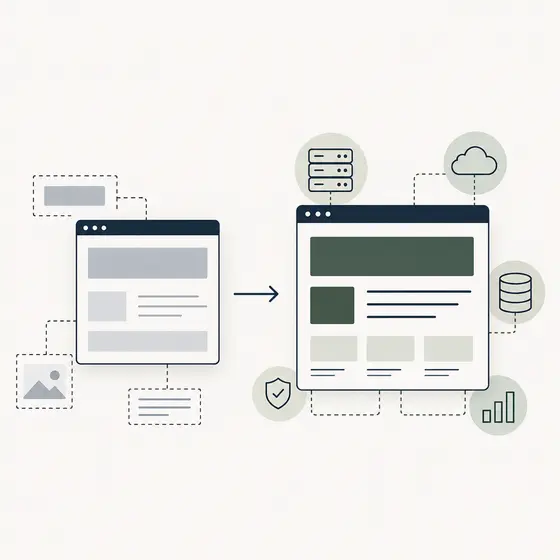
That distinction is becoming more important because it is now possible to build something that looks surprisingly finished in a very short amount of time. You can have screens, buttons, data, and a working demo before you have answered some of the harder questions behind the product. There is nothing wrong with that. In fact, we think it is one of the best parts of where development is heading. We can test ideas faster, show clients something earlier, and explore different approaches without spending weeks building each one. It gives us more room to experiment before committing to a direction.
A prototype can help prove that an idea is possible, but production software needs to keep working when real users, real data, and unexpected situations are introduced.
The important part is understanding the difference between something that works in a demo and software that people can depend on every day. That is where experience still matters. The value isn’t just knowing how to write the code. It’s knowing what should be built, how the pieces should work together, what could go wrong, and what needs to happen before we’re comfortable putting something in front of real users.
Better Tools Create More Time for Judgment
As AI continues to improve, we expect the amount of time spent manually writing certain kinds of code to keep shrinking, and we think that is a good thing. It gives us more time to focus on the decisions around the code and on solving the actual problem someone came to us with in the first place. At Allied Code, we aren’t trying to write the most code. We’re trying to build software that solves something and continues working once it leaves the development environment. The tools we use to get there are changing quickly, but the responsibility to build something good hasn’t.
If you’re interested in the idea that got us thinking about this, Financial Express has a good look at the growing gap between generating code with AI and getting that code ready for production.
Read the Financial Express article on the code-to-production gap →